|
- Iran: Eight Prisoners Hanged on Drug Charges
- Daughter of late Iranian president jailed for ‘spreading lies’ - IRAN: Annual report on the death penalty 2016 - Taheri Facing the Death Penalty Again - Dedicated team seeking return of missing agent in Iran - Iran Arrests 2, Seizes Bibles During Catholic Crackdown
- Trump to welcome Netanyahu as Palestinians fear U.S. shift
- Details of Iran nuclear deal still secret as US-Tehran relations unravel - Will Trump's Next Iran Sanctions Target China's Banks? - Don’t ‘tear up’ the Iran deal. Let it fail on its own. - Iran Has Changed, But For The Worse - Iran nuclear deal ‘on life support,’ Priebus says
- Female Activist Criticizes Rouhani’s Failure to Protect Citizens
- Iran’s 1st female bodybuilder tells her story - Iranian lady becomes a Dollar Millionaire on Valentine’s Day - Two women arrested after being filmed riding motorbike in Iran - 43,000 Cases of Child Marriage in Iran - Woman Investigating Clinton Foundation Child Trafficking KILLED!
- Senior Senators, ex-US officials urge firm policy on Iran
- In backing Syria's Assad, Russia looks to outdo Iran - Six out of 10 People in France ‘Don’t Feel Safe Anywhere’ - The liberal narrative is in denial about Iran - Netanyahu urges Putin to block Iranian power corridor - Iran Poses ‘Greatest Long Term Threat’ To Mid-East Security |
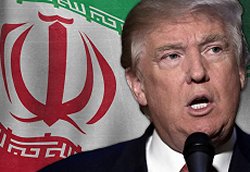
Friday 28 March 2008Cheney disputes Iran's nuclear goalsTehran is trying to enrich uranium to weapons-grade levels, he says. The allegation contradicts international findings. Los Angeles Times BEIRUT — Vice President Dick Cheney charged in an interview released Tuesday that Iran is trying to develop weapons-grade uranium, though international inspectors and U.S. intelligence services have not found evidence of such an effort. "Obviously, they're also heavily involved in trying to develop nuclear weapons enrichment, the enrichment of uranium to weapons-grade levels," Cheney said, according to a transcript released by the White House of an interview done Monday in Turkey with ABC's Martha Raddatz. Iran insists its nuclear program is for peaceful energy production, but the U.S. and other Western countries fear Tehran will eventually develop nuclear weapons. In its latest report, the International Atomic Energy Agency, the United Nations' nuclear watchdog agency, says Iran is enriching uranium at its plant in Natanz to less than 3.8%, which is the level necessary to create fuel for a civilian reactor. Weapons-grade uranium is enriched to 80% or 90%. Cheney's comment also contradicted the assessment of U.S. intelligence agencies, which concluded in a report revealed late last year that Iran had halted its efforts to develop nuclear weapons in 2003. The vice president's statement was the second time in a week that a White House official has made an allegation regarding Iran's nuclear program and its intentions that did not square with publicly known facts. President Bush said last week that Iran's leaders had "declared" they were seeking nuclear weapons. Iran has always denied the charge, and the White House later backpedaled, calling the president's remarks "shorthand." Cheney made the remarks at the end of a 10-day tour of Middle East countries to discuss high oil prices, the U.S. military presence in Iraq and Afghanistan and the Arab-Israeli conflict. But the subject of Iran was never far from his agenda. In addition to Israel and the Palestinian territories, his route took him to Oman, Saudi Arabia, Afghanistan, Iraq and Turkey, in effect encircling the country that has become the greatest U.S. rival in the region. And at almost every stop, he brought up the subject of Iran and its role in disrupting U.S. efforts in the region. Before the first stop of his visit to Oman, a Cheney aide told Agence France-Presse news service that Iran "has got to be very high" on the agenda for the talks. "The Omanis . . . are concerned by the escalating tensions between much of the world community and Iran and by Iran's activities, particularly in the nuclear field," the news agency quoted the aide as saying. In Saudi Arabia, Cheney also brought up the Iran issue. According to the Jidda-based English-language Arab News, the Saudis oppose any war with Iran. Saudi King Abdullah also raised the issue of Israel's undeclared nuclear program, saying that the Middle East should be free of nuclear weapons and other weapons of mass destruction. In Jerusalem on Monday, Cheney accused Iran and Syria of "doing everything they can to torpedo the peace process," a reference to the teetering talks between Israel and the Palestinians.
Previous News :
Report accuses BBC of supporting Iran
Next news : Bush On Iran And The Future Of Iraq  Send to a Friend
|
Home
|
Print this page
Send to a Friend
|
Home
|
Print this page

|